Clemson, South Carolina, USA
March 23, 2026
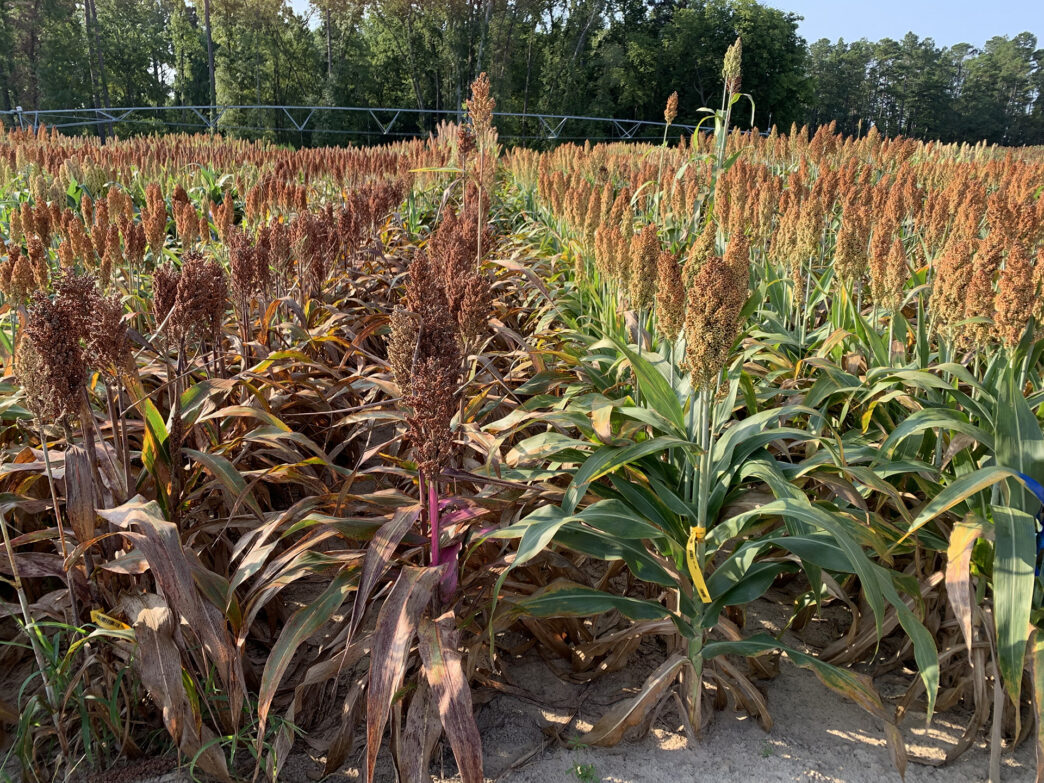 Sorghum infected with anthracnose growing at the Pee Dee REC. Plants on the left are an anthracnose-susceptible hybrid. Plants on the right right are a resistant hybrid.
Richard “Rick” Boyles, an associate professor of cereal grains breeding and genetics at Clemson University, has been awarded a $495,000 grant from the U.S. Department of Agriculture to develop higher-yielding, disease-resistant sorghum hybrids tailored to farmers in the Eastern U.S., where commercial options remain scarce.
Boyles, based at the Clemson University Pee Dee Research and Education Center (REC) near Florence, South Carolina, received the funding from the USDA National Institute of Food and Agriculture. The project will run through January 2029.
Hybrids for the Southeastern U.S.
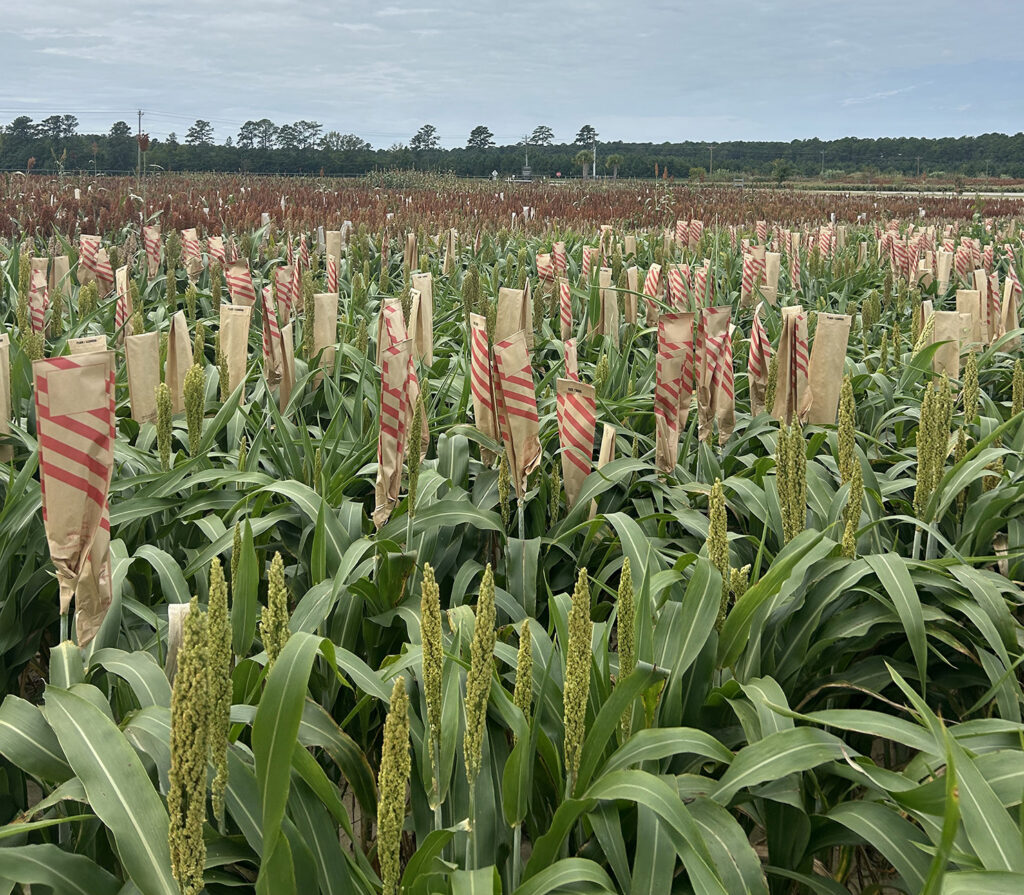 Shot in the Clemson University population development nursery at the Pee Dee REC, this image shows plants that have been cross-pollinated to create new breeding populations for future testing and selection.
Sorghum, commonly known as milo, is widely used in livestock feed and pet food and is gaining renewed attention as a hardy alternative to corn. It requires less water, performs well on marginal soils and is not genetically modified. But most commercially available hybrids were bred for other regions, leaving Southeastern farmers with limited choices adapted to their climate and disease pressures.
The project will focus on breeding parent lines resistant to anthracnose and grain mold, two fungal diseases that can significantly reduce yields. Researchers will also develop hybrids tolerant to certain post-emergence herbicides, allowing growers to control invasive grasses without damaging the crop.

Richard Boyles
“Farmers in our region need sorghum hybrids that possess more than just yield potential,” said Boyles, who has previously released new sorghum parents for commercial hybrid production. “They need new traits that can prevent yield and profit loss from the two main biotic stressors: disease and grass weeds.
“This dedicated effort will create durable resistance to fungal pathogens that cause anthracnose and grain mold while making new hybrids tolerant to over-the-top herbicides that can kill emerged grass weeds like Texas panicum.”
Clemson operates the only public grain sorghum breeding program east of the Mississippi River. In recent years, the program has licensed parent lines to Carolina Seed Systems (CSS) for commercial hybrid development, with resulting hybrids now grown from Florida to Pennsylvania.
“We’ve made considerable progress to build genetics that fit the region, but farmers need more hybrid options that integrate better stress tolerance with higher yield potential,” Boyles said. “This grant by the USDA allows us to accelerate that progress and we are eager to get started.”
The goal is to make sorghum the most reliable and profitable crop on the region’s marginal soils, which would help reduce the large grain deficit in the Eastern United States.
Supporting the broader sorghum community
Boyles and his team will evaluate experimental lines and hybrids from other breeding programs in an anthracnose field nursery, providing data to strengthen anthracnose resistance across the board.
They will incorporate known resistance genes to enhance the development of anthracnose-resistant lines.
Weed control will also be addressed. Many farmers battle with grass weeds in sorghum because post-emergence options are extremely limited. The research team between Clemson and CSS will develop and test new sorghum hybrids that can survive certain herbicides, allowing farmers to kill common grass weeds like Texas panicum, Johnsongrass and crabgrass without harming the crop.
Combining this herbicide technology with adapted genetics can significantly improve sorghum yields.
Facilities, equipment used
The research will primarily be conducted at the Pee Dee REC.
The Palmetto2 supercomputing cluster will be used to store and analyze data. The Palmetto 2 is Clemson’s primary high-performance computing system located on the main campus. It is used by researchers, students, faculty and staff to produce and store large quantities of data. Boyles and his team will use Palmetto2 remotely from the Pee Dee REC.
This research will offer a service to all American-based sorghum breeding programs, public and private, to screen their hybrids/lines for resistance to anthracnose and other fungal diseases of interest.
The project will also support workforce development by providing training opportunities for a doctoral student and a postdoctoral researcher.
Enormous potential
The Southeast faces a persistent feed-grain deficit, forcing poultry and livestock producers to import grain from other regions. Expanding regional sorghum production could reduce that dependence while giving farmers a profitable alternative crop for marginal soils.
“Sorghum has enormous potential in the Southeast,” Boyles said. “It’s drought-tolerant and can be integrated into existing crop rotations to provide benefits to other crops like peanuts and soybeans. A major benefit in our region is that sorghum is less susceptible to yield loss from whitetail deer feeding. Our ultimate goal is to make it a mainstream crop option.”
Over the long term, the project aims to strengthen sorghum breeding programs and provide farmers with more resilient, productive crop choices.
“At the end of the day, it’s about giving farmers better tools,” Boyles said. “If we can deliver new genetics that yield well, resist diseases and increase weed control, that’s a win for agriculture across the region.”
This work is supported by the Agriculture Food and Research Initiative project award no. 2026-67014-45815 from the U.S. Department of Agriculture’s National Institute of Food and Agriculture.




 Topics
 Species