

 Topics
 Species


Given the unique geographical, climatic, and farming practices of Cao Bang province, selecting hybrid rice varieties that are highly adaptable, vigorous, fairly resistant, and yield consistently is a key requirement for local rice production.
Based on that experience, ThaiBinh Seed recently collaborated in organizing a field conference to evaluate two hybrid rice varieties, TBH456 and QL301, at Group 8, Thuc Phan Ward, Cao Bang Province. The conference was chaired by Ms. Ma Thi Tra My – Deputy Director of the Department of Agriculture and Environment of Cao Bang Province, with the participation of representatives from specialized agencies, local authorities, technical staff, and a large number of farmers in the area.

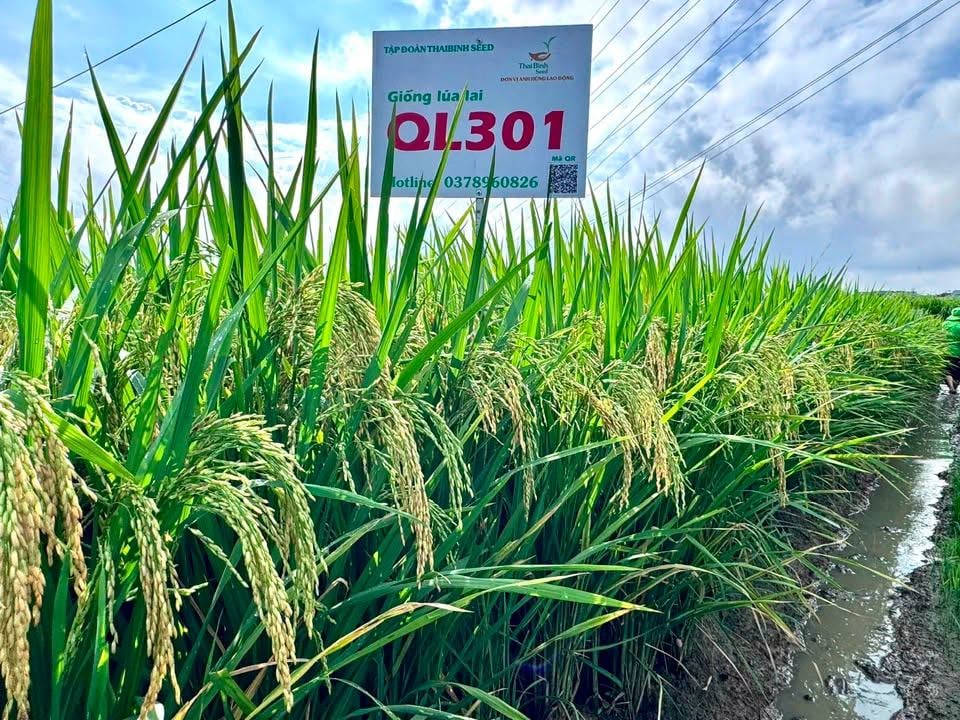
Implemented under real-world local farming conditions, the model of two hybrid rice varieties, TBH456 and QL301, has shown many positive signs. Field observations indicate that both varieties grow and develop well, with strong tillering, sturdy stems, compact foliage, and good resistance to diseases and pests, making them suitable for production conditions in mountainous areas. The rice fields show uniform growth, promising potential for high yields and economic efficiency for farmers.

Among them, TBH456 demonstrates superiority in terms of vigorous growth, high yield, and delicious, soft, and flavorful rice. TBH456's strengths also lie in its resistance to major pests and diseases such as blast and brown planthopper, as well as its cold tolerance and lodging resistance. These are essential characteristics for farmers in areas frequently affected by unfavorable weather or with limited investment in cultivation.

QL301, a hybrid rice variety suitable for processing, has strong stems, grows quickly, is less susceptible to pests and diseases, and yields high productivity. Given the unpredictable weather conditions of this year's spring crop, this is a very encouraging result, demonstrating the variety's good adaptability and resistance, as well as its stability in population uniformity, making it favorable for field management and harvesting.
Speaking at the conference, Ms. Ma Thi Tra My, Deputy Director of the Department of Agriculture and Environment of Cao Bang province, acknowledged the cooperation of ThaiBinh Seed in bringing new hybrid rice varieties for testing and demonstration in the locality, thereby providing a basis for selecting and adding suitable varieties to the province's production structure in the future.

Through this model, ThaiBinh Seed continues to affirm its commitment to supporting mountainous localities in selecting, testing, and introducing high-yielding, high-quality hybrid rice varieties that are well-adapted to specific farming conditions. This is an important foundation for Cao Bang's agricultural sector to continue evaluating, selecting, and gradually expanding the area of promising varieties, contributing to improved rice production efficiency and increased income for farmers in the region.