Fayetteville, North Carolina, USA
August 18, 2025
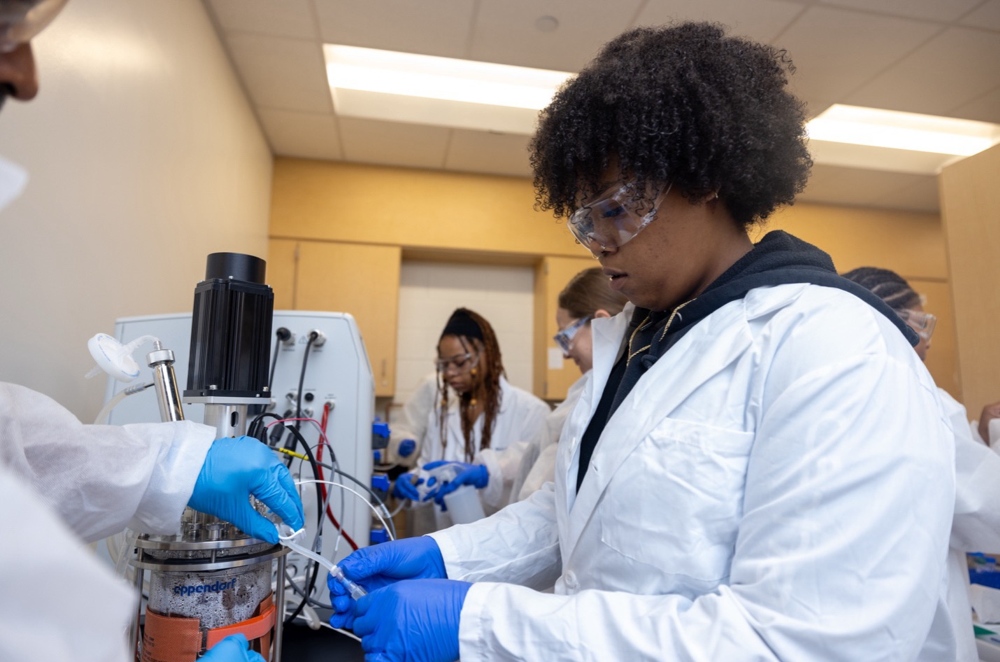 Fayetteville State University students train on lab equipment on campus. The image represents the hands-on science that powers FSU’s recent soybean DNA research. (Fayetteville State University file photo)
Breeders may soon have a better approach to grow soybeans with more of a health-promoting peptide. In a new peer-reviewed study supported by the National Science Foundation, Fayetteville State University students and collaborators mapped sections of the soybean genome linked to higher levels of lunasin, a natural soy peptide studied in lab and animal models for cancer-preventive, antioxidant, and cholesterol-lowering effects.

Jiazheng "John" Yuan, associate professor and assistant chair in FSU's Department of Biological and Forensic Sciences, mentored student co-authors and helped lead the soybean genetics study. (Fayetteville State University file photo)
Under the guidance of Jiazheng "John" Yuan, associate professor and assistant chair in FSU's Department of Biological and Forensic Sciences, students co-authored the paper with Elvira de Mejía, a food scientist at the University of Illinois Urbana-Champaign, and Rouf Mian, a Raleigh research scientist with the U.S. Department of Agriculture's Agricultural Research Service.
"The goal of the NSF-funded study is to provide breeders with scientifically validated, reliable information that can enhance the efficiency of crop improvement," said Yuan. "If a marker proves to be consistent across various germplasm from the USDA collection and across North Carolina's fields, it increases the chances of its successful adoption in other breeding programs."
The research team measured lunasin in seeds using a standard antibody-based lab test and analyzed 144 diverse soybean lines in a genome-wide DNA scan for links between genetic markers and traits. To validate the results, they drew seeds from two independent sources: archived samples from the USDA Soybean Germplasm Collection and field-grown seeds from Clayton.
The analysis identified critical DNA markers distributed across 15 chromosomes and revealed 29 high-confidence candidate genes associated with natural variations in lunasin. These findings provide valuable genetic resources for breeding programs aimed at enhancing the nutritional and functional quality of soybeans.
Drawing on years of work in Yuan's lab, with past and current students, the team identified DNA markers significantly associated with lunasin content in soybean seeds across different growing seasons. In one instance, a single DNA marker explained approximately 31% of the observed variation in lunasin content among the tested soybean accessions. Many of these markers are located near genes that assist the seed in interpreting genetic instructions, transporting amino acids, and constructing proteins; all essential processes the plant uses to produce lunasin.
For breeders, this genetic map offers DNA markers they can use to select soybean lines that naturally produce higher levels of lunasin through conventional breeding methods. This advancement also presents opportunities for food companies to develop value-added ingredients and allows growers to produce superior traits.
The researchers published their findings on July 14 in the peer-reviewed journal Plants. This publication highlights Fayetteville State University's dedication to enhancing research funding aimed at pioneering studies that address critical issues in food security and public health.




 Topics
 Species