De Lier, The Netherlands
March 3, 2026
According to the statistics, organic consumption continues to grow worldwide. This created an upbeat atmosphere at Biofach, the international trade fair for organics held in Nuremberg, Germany, in early February. However, there are some concerns about the stagnating number of organic farmers. Heleen Bos and Sanne Sijbesma from Rijk Zwaan share these and other insights they gained at the event – including about the positive effect of ‘nudging’ in Denmark, for example.
Biofach attendees could sample all manner of new organic products, from potato crisps and cheeses, to ice cream, nuts and even water. “Although fruits and vegetables accounted for just a small proportion of what was on display, the event was still worth visiting to learn about the latest trends and developments,” explains Heleen, Specialist Marketing Organics.
Fruit and vegetable sales rise in China
There was good news from the Swiss Research Institute of Organic Agriculture (FiBL), which published its annual trend report on the organic sector. “Figures from 2024 show an upward swing in the cultivation and consumption of organic products. Opportunities for organic farming are strong in Africa, and also in China where the consumption of organic fruits and vegetables rose by as much as 15%. We’re also pleased to see slight growth in the US and Europe,” says Heleen, summing up the most important developments.
Lack of young organic farmers
However, she sensed some concerns about the low number of young organic farmers. “I heard that land suitable for organic cultivation is hard to come by in Canada, and it’s also difficult to make the transition in Europe. Fortunately, the European Union has developed policies to change this. Better access to both land and financing will encourage the next generation of farmers,” Heleen continues.
Retailers turn to nudging
A key aim of Biofach is to facilitate knowledge sharing and mutual learning. In this context, one impressive presentation titled ‘Connecting with Consumers’ compared the situations in North America, the United Kingdom and Denmark. “It’s great that the Danish government is playing such a stimulating role, such as by offering free certification for organic farmers and also supporting campaigns targeting Gen Z,” explains Sanne, who is a member of Rijk Zwaan’s Working Group on Organics.
Dennis Hvam of Organic Denmark shared a success story from the Danish organic sector. “Retailers ‘nudge’ consumers towards organic fruits and vegetables with messages such as ‘0% of organic cucumbers test positive for residues, compared with 58% of non-organic cucumbers,’ for example,” says Sanne. “Thanks to this kind of nudging, organic accounts for up to 80% of fruits and vegetables sold in supermarkets there.”
The seal makes it simple
There is still a universal need to keep explaining to consumers exactly what ‘organic’ means. “In the USA, the Organic Trade Association has developed a quality seal, supported by a video called ‘The seal makes it simple’, to help shoppers make informed choices,” explains Heleen.
Due to the rise of regenerative agriculture, which was also represented at Biofach, it is even more important that consumers have clarity. Heleen: “Fortunately, the regenerative agriculture sector is now taking its first steps in terms of certification, but the organic sector is light years ahead in comparison. Most organic farmers don’t see regenerative agriculture as a competitive threat. Any development that reduces monocultures and promotes soil health deserves to be embraced.”
Plant-based foods
Another trend that caught Heleen’s eye at Biofach was the broad focus on plant-based foods, which form the basis of the ‘Planetary Health Diet’. This movement advocates a healthy diet made up largely of fruits and vegetables. That’s not only better for people themselves, but also for the planet. Heleen sees this movement as an opportunity for the organic sector. “The trend of eating more plant-based foods is a good fit, because it can drive higher consumption of organic fruits and vegetables.”
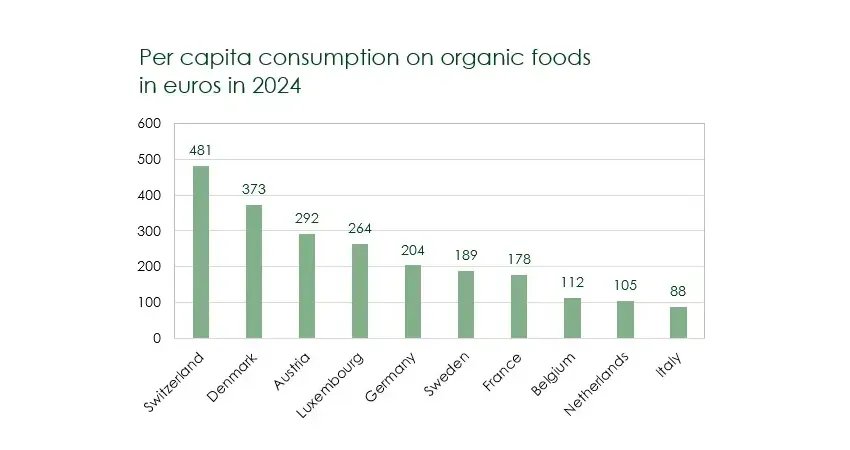 Are you interested to learn more about the worldwide trends and developments relating to organic farming and sales of organic food and drink? Download FiBL’s The World of Organic Agriculture 2026.
Discover the assortment
Want to know more about Rijk Zwaan’s varieties for organic cultivation?
Click here to request our new leaflets and explore our range of organic and non-chemically treated seeds.
Our seeds are sold through over 30 local subsidiaries. For the local seeds assortment in your country and availability of organic varieties, please visit your local Rijk Zwaan website.




 Topics
 Species