France
April 8, 2026
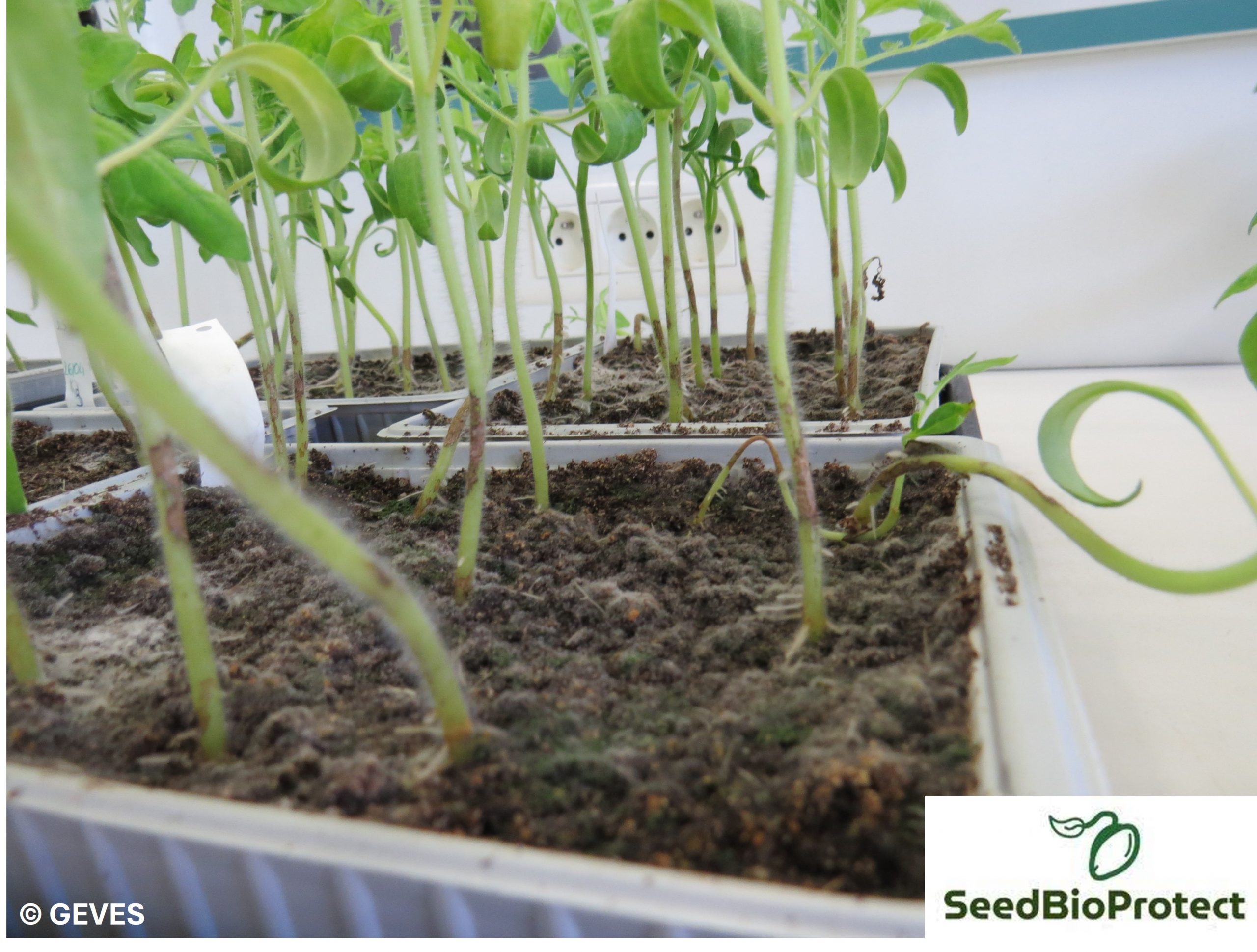
The SeedBioProtect project, which began in early 2023, came to an end in December 2025. At the final presentation event on 25 March 2026, GEVES had the opportunity to review the results achieved as part of the project.
This project, funded by the Biocontrôle and PlantAlliance consortia, aimed to characterise the metabolic and molecular defence mechanisms of seeds during their development, maturation and germination.
It also focused on investigating the impact of seed production sites and genotypes on the effectiveness of biocontrol solutions.
The aim was therefore to promote the development of new strategies for boosting the body’s natural defences through biocontrol solutions.
GEVES, in collaboration with Vegenov and Staphyt, has played a key role in developing reliable and objective assessment methods to measure the effectiveness of biocontrol solutions applied to seeds.
The pathosystems studied (four genotypes assessed for each species) correspond to three major soil-borne diseases:
- Rhizoctonia solani / Tomato: responsible for damping-off; as there are no fungicides approved in France, biocontrol represents a vital approach for this pathosystem.
- Pythium irregulare / Wheat: a pathogen causing root and grain rot, now controlled through preventive measures and seed treatments.
- Fusarium graminearum /Wheat: a serious pathogen affecting roots, seedlings and ears. There is a strong demand for biocontrol alternatives.
As these pathogens are all present in the soil, protecting crops from the moment of sowing is a major challenge.
In this context, GEVES has ensured:
- Coordination of WP4,
- The implementation of standardised and harmonised protocols,
- The comparative evaluation of promising biocontrol treatments,
- The dissemination of results with partners.
Through this WP4, led by GEVES, SeedBioProtect has therefore resulted in the provision of robust tools to support the development of biocontrol in seed treatment.




 Topics
 Species