De Lier, The Netherlands
April 8, 2026
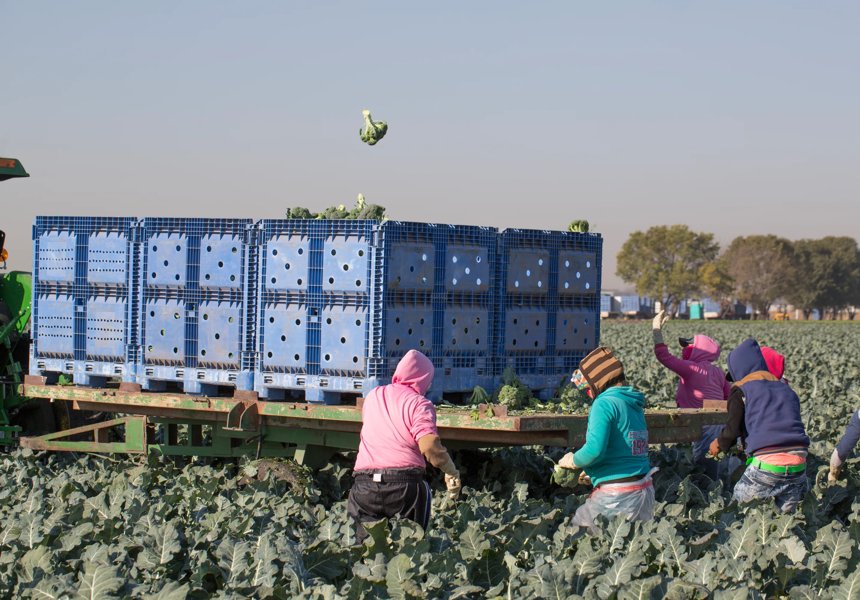
Broccoli harvesting is still largely done by hand and is highly labour-intensive. Mechanisation is therefore a key development in broccoli cultivation. With new, selective harvesting machines, growers are less dependent on the availability of labour. At Rijk Zwaan, our broccoli breeders are responding to this development by creating varieties and concepts that are suited to the latest mechanical harvesting methods. As a crop specialist for brassicas, John Buijsman has an in-depth understanding of mechanisation and the challenges it brings for breeding.
In manual harvesting, harvesting teams cut the broccoli by hand and place it on a harvesting belt. Such teams usually consist of four to eight people. The level of labour intensity varies by product type. Harvesting bimi – popular in the Netherlands – can be up to seven times more labour-intensive. “Each stem is cut individually by hand,” John explains.
Selective harvesting machines: a breakthrough
For years, machine manufacturers and growers have been working on mechanisation. Until recently, however, machines were destructive: they harvested everything in one pass, regardless of size or quality, after which the crop was lost. “You save on labour, but you lose yield potential,” says John.
Recently, a selective harvesting machine has been introduced to the market (see video). This machine moves through the crop and uses cameras and AI to select broccoli based on colour, size and quality. Is the broccoli unripe or damaged? Then it is left standing. “You improve quality, quantity and yield all at once,” John says enthusiastically. Such machines require a substantial investment. Even so, according to John, mechanisation is sometimes unavoidable: “If there are not enough people available, you simply have to mechanise.”
Breeding for mechanisation
Can Rijk Zwaan breed the perfect broccoli for these machines? “Yes, we are well prepared for that,” John explains. Varieties with a sturdy stem and heads that are not positioned too low on the plant are prioritised. Interestingly, a tall stem may seem practical, but it sways in the wind and does not stand neatly in the row. A stable stem without thick leaf attachments is most suitable, as thick attachments can cause damage during harvesting.
New concepts under development
In addition to varieties for existing machines, Rijk Zwaan is also developing new broccoli concepts in collaboration with mechanisation companies. The ultimate goal is to increase growers’ returns, ensuring that broccoli cultivation remains economically attractive. “The trials so far are very promising,” John shares.
On the way to the ideal variety
The perfect variety is not only about harvesting, but also about cultivation and consumer trends. Growers are looking for high productivity with, among other things, reduced chemical crop protection. That is why we develop robust varieties that are more resistant to diseases and require less nitrogen and water. Shorter growing cycles save water and reduce the risk of pests. “If the canopy develops more quickly, we save water and are literally ahead of diseases,” says John.
Consumers also have their own preferences. Purple sprouting broccoli, for example, is popular in the UK, while bimi is a favourite in the Netherlands. Our breeders therefore continuously search for traits that respond to all these trends.




 Topics
 Species