|
Powdery mildew on sunflower in Tanzania
A ProMED-mail post
ProMED-mail is a program of the International Society for Infectious Diseases
A ProMED-mail post
<http://www.promedmail.org>
ProMED-mail is a program of the International Society for Infectious Diseases <http://www.isid.org>
Date: December 4, 2008
Source: Daily News [edited]
<http://dailynews.habarileo.co.tz/home/?id=8837>
Kilimanjaro fails to meet production targets
Some 1.5 million tonnes of cash and food crops were harvested in Kilimanjaro region, of the projected 1.7 million tonnes last financial year.
Mrs Hilda Mkamba, an agricultural expert at the regional secretariat, informed delegates of the Regional Consultative Committee (RCC) that during last rainy season, sunflower production was very poor as the crop continued to be attacked by "powdery mildew", a devastating powder-like fungus.
Farmers have been advised to plant certified seeds during the next crop season to contain the plant disease.
Despite the achievement in irrigated agriculture, Moshi, Mwanga, Rombo, and Same districts were faced with shortage of food and needed subsidized or affordable food supplies.
[byline: Peter Temba]
--
communicated by:
ProMED-mail
<promed@promedmail.org>
[Powdery mildew of sunflower is caused by the fungus _Golovinomyces cichoracearum_ var. _cichoracearum_ and can cause serious economic losses in crops growing in warmer regions. It causes white 'powdery' growth on leaves and other plant parts, which may coat large areas. The disease can seriously reduce the vigour of the host affecting crop yield. The fungus is spread with wind, water, and mechanical means and survives on crop residue.
Disease management relies mainly on fungicides. Partial genetic resistance has been reported in commercial sunflower, but additional resistance in wild relatives (_Helianthus_ species) has been shown to be available for possible use in interspecific crosses.
While _G. cichoracearum_ (formerly _Erysiphe cichoracearum_) has a wide host range and geographical distribution, numerous races exist, which can be distinguished by molecular analysis. They are usually specific to a small number of hosts. Some strains of the pathogen can cause serious disease in melons and other cucurbits.
Maps
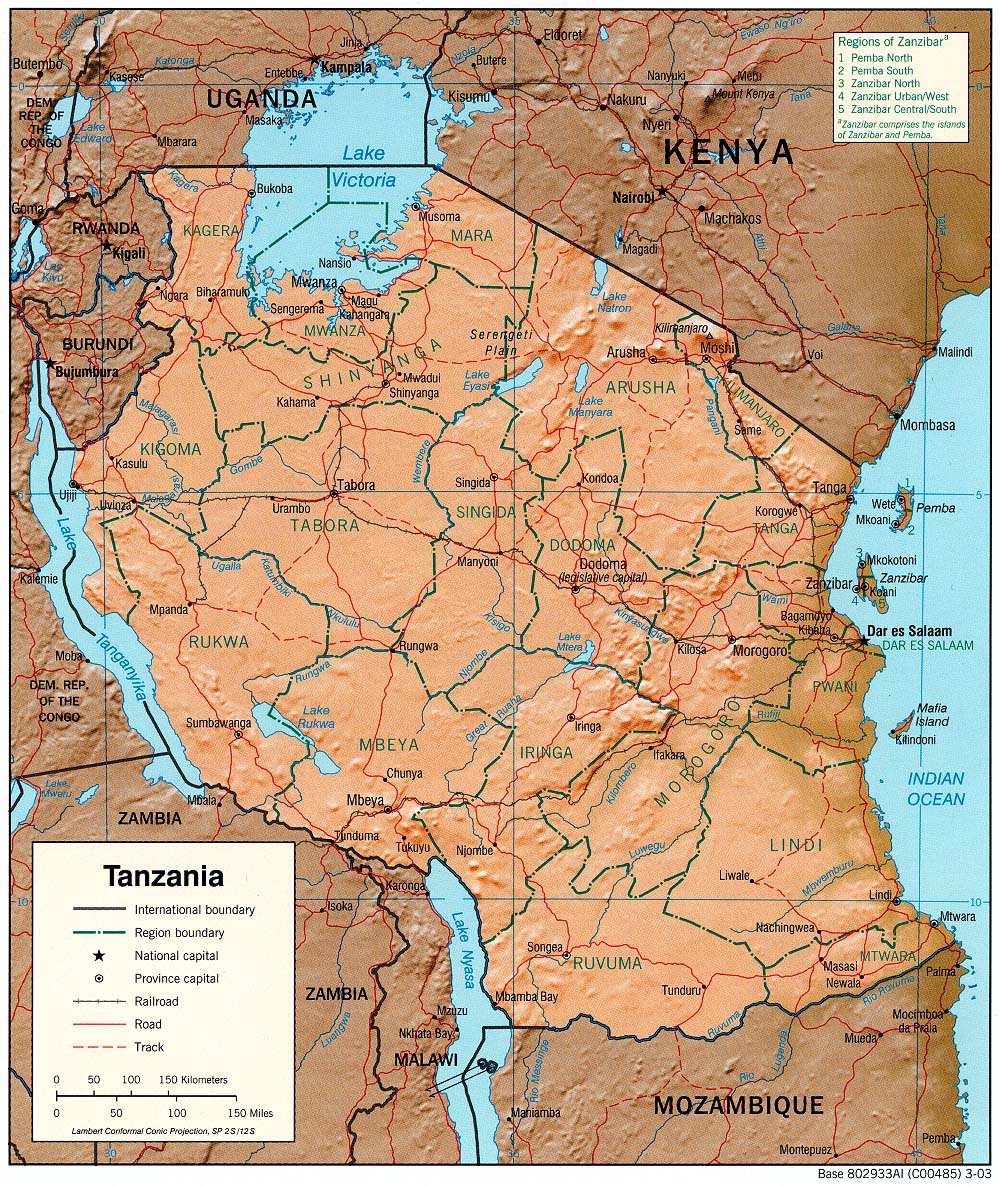
Tanzania:
<http://www.lib.utexas.edu/maps/africa/tanzania_rel_2003.jpg>,
<http://unimaps.com/tanzania/mainmap.gif> and
<http://healthmap.org/promed/en?g=157449&v=-3.75,37.75,5>
Tanzania regions:
<http://upload.wikimedia.org/wikipedia/commons/2/2b/Tanzania_Regions.png>
Pictures of powdery mildew on sunflower leaves:
<http://plantpathology.tamu.edu/Texlab/Fiber/Sunflower/Images/sunf3.jpeg> and <http://www.jnkvv.nic.in/IPM%20Project/sunflower/Symptoms-of-powdery-mildew-.jpg>
Links
Information on powdery mildew of sunflower:
<http://plantpathology.tamu.edu/Texlab/Fiber/Sunflower/pm.html>,
<http://plant-disease.ippc.orst.edu/disease.cfm?RecordID=1251>
<http://www.ikisan.com/links/ap_sunflowerDisease%20Management.shtml#Powdery%20Mildew>
and
<http://www.jnkvv.nic.in/IPM%20Project/disease-sunflower.html#Powdery_mildew>
Information on _G. cichoracearum_:
<http://www-biol.paisley.ac.uk/bioref/fungi_ascomycetes/erysiphe_cichoracearum.html>
and
<http://gis.ucsc.edu/disease/Fungal%20Pathogens/Erysiphe/ecichoracearumportrait.html>
Identification of _G. cichoracearum_ strains:
<http://www.publish.csiro.au/paper/AP03045.htm>
_G. cichoracearum_ var. _cichoracearum_ taxonomy:
<http://www.indexfungorum.org/Names/NamesRecord.asp?RecordID=461120>
General information on powdery mildew fungi:
<http://www-biol.paisley.ac.uk/bioref/fungi_ascomycetes/profile_Erysiphales.html>.
- Mod.DHA]
[see also in the archive:
2007
---
Powdery mildew, watermelon - USA: resistance breeding 20070422.1320
2004
---
Powdery mildew, race 2, melon - Brazil (SP) 20041128.3179]
More news from: ISID (International Society for Infectious Diseases)
Website: http://www.isid.org Published: December 4, 2008 |
|
The news item on this page is copyright by the organization where it originated
Fair use notice |




 Topics
 Species